
In industrial factory operations, the air compressor system is often referred to as the “heart” that powers the entire production line. For this “heart” to run smoothly and reliably, air compressor lubricant plays a critical role with 4 key functions: lubrication, cooling, sealing, and corrosion protection.
However, given the wide array of options in today’s market, plant managers and maintenance engineers frequently ask: Should we use mineral or synthetic compressor oil? How can we optimize costs while offering maximum protection for Ingersoll Rand and Deman compressors?
In this article, Tay Ho Star provides a technical breakdown of each lubricant type and introduces a high-performance lubrication solution featuring Shrieve specialized synthetic compressor oils.
1. Technical Fundamentals: Mineral Oil vs. Synthetic Oil
Air compressor oils are categorized into two primary groups based on base oil technology:
Mineral Air Compressor Oil
-
Origin: Derived from refined crude oil through physical and chemical separation processes.
-
Molecular Structure: Consists of hydrocarbon molecules of irregular sizes and shapes. Under high operating temperatures and pressures, these molecular bonds break down quickly, leading to rapid oxidation.
-
Applications: Best suited for piston compressors, light-duty operations, or intermittent use with shorter drain intervals.
Synthetic Air Compressor Oil
-
Origin: Engineered through advanced chemical synthesis (such as Alkylbenzene – AB, PAO, Ester, or PAG) to create uniform molecular chains.
-
Molecular Structure: Highly stable structure offering superior thermal stability, high oxidation resistance, and consistent viscosity retention even under severe operating conditions.
-
Applications: Specifically designed for oil-injected rotary screw compressors (such as Ingersoll Rand and Deman) running 24/7 in demanding industries like power generation, cement, textiles, and food & beverage.
2. Comprehensive Comparison of Technical Properties & Characteristics
Below is a detailed comparison highlighting the physical properties, pros, and cons of mineral vs. synthetic compressor oils:
| Technical Criteria | Mineral Compressor Oil | Synthetic Compressor Oil |
|---|---|---|
| Molecular Structure | Non-uniform; prone to breakdown under heat | Uniform; highly stable chemical bonding |
| Viscosity Index (VI) | Moderate (90 – 100). Fluctuates with temperature | Very High (> 130). Maintains stable oil film in extreme heat |
| Oxidation Stability | Low; susceptible to sludge and varnish buildup | Exceptional; keeps airends and valves clean |
| Service Life | Short (Typically 1,000 – 2,000 operating hours) | Extended (From 4,000 – 8,000+ continuous hours) |
| Key Advantages |
|
|
| Key Disadvantages |
|
|
3. Shrieve Air Compressor Oil – Premium Synthetic Solution Distributed by Tay Ho Star
As a trusted distributor of industrial machinery and consumables in Vietnam, Tay Ho Star proudly supplies Shrieve synthetic air compressor lubricants (USA) – a globally recognized brand in specialty chemical lubrication.
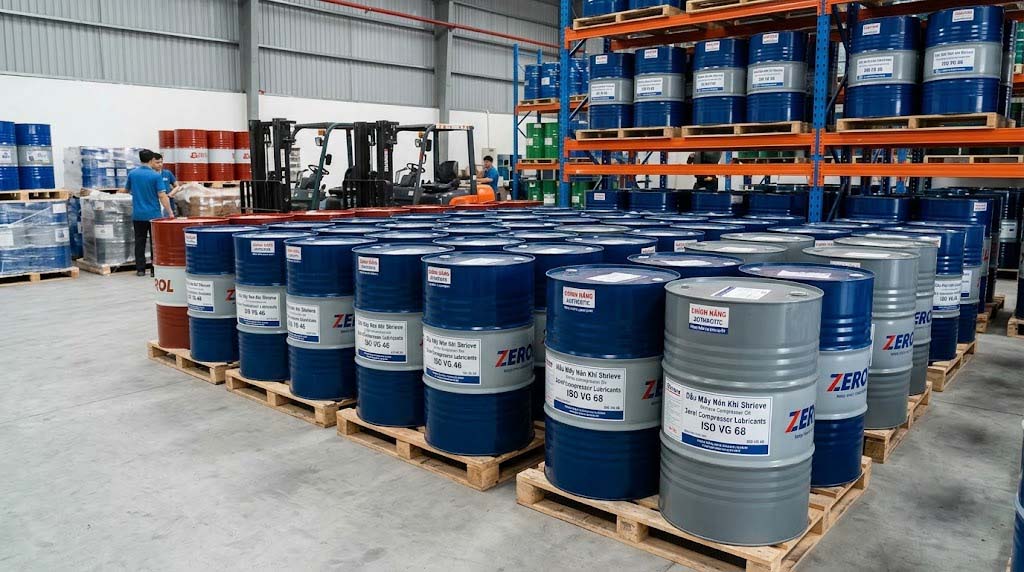
Why Shrieve Lubricants (e.g., ZEROL® AIR 3000 Series) Are Ideal for Ingersoll Rand & Deman Compressors:
-
Superior Resistance to Varnish and Sludge: Formulated with proprietary synthetic technology, Shrieve lubricants prevent varnish and carbon deposits from forming on screw rotors. This keeps the Air End clean, lowers operating temperatures, and extends equipment life.
-
Excellent Demulsibility (Water Separation): In Vietnam’s warm and humid climate, moisture condensation in air systems often causes oil emulsification. Shrieve oil separates water rapidly, keeping the air/oil separator filter from clogging prematurely.
-
Energy Efficiency & Reduced Friction: The low friction coefficient enables Ingersoll Rand and Deman rotary screw compressors to run smoother, reducing engine load and lowering overall power consumption.
-
Seamless System Integration: Tay Ho Star offers complete air system packages, combining Shrieve lubricants with Tiger / Ingersoll Rand Air Filters to ensure maximum reliability and peak performance.
4. Expert Recommendations
-
Choose Shrieve Synthetic Oil when: Your plant operates rotary screw compressors continuously under high loads or elevated ambient temperatures (e.g., thermal power plants, cement factories, textile mills, F&B production). Using Shrieve synthetic oil minimizes unplanned downtime and labor costs associated with frequent maintenance.
-
Transition Tip: When switching from mineral oil to Shrieve synthetic oil, ensure a thorough system flush and replace all oil filters and separator elements to achieve peak lubricating efficiency.
Contact Information
Selecting the correct compressor oil based on your operational requirements can significantly reduce annual factory maintenance costs. Tay Ho Star is committed to delivering authentic Shrieve compressor oils with complete CO/CQ documentation and dedicated on-site technical support.
👉 Need expert advice or a quote for Shrieve compressor lubricants?
-
Hotline: 096 828 1912
-
Email: quanghuy@tayhostar.vn
-
Office Address: 91 Trung Kinh, Trung Hoa Ward, Cau Giay District, Hanoi, Vietnam
-
Website: https://tayhostar.vn/